
In the cavernous underbellies of global cities, abandoned shipyards, forgotten industrial parks, and windswept docklands, an unlikely gladiatorial theatre once roared to life. At the crossroads of fixed gear subculture, hyper-athleticism, and exhibitionism lay the Red Hook Criterium, a short-circuit, high-stakes bicycle race that catapulted the fixie scene out of the alleys and onto the global stage. First held in Brooklyn in 2008, the Red Hook Crit (RHC) fused the DNA of underground racing with the stylised bravado of street culture, later expanding to Milan, Barcelona, and London. Despite its cessation after 2018, the series left a distinct tyre mark not only on urban cycling but also on digital platforms, most notably YouTube, where many of the previous stars of the race pivoted their careers.
Today, we will examine the genesis, evolution, and legacy of the Red Hook Crits through the intertwined lenses of subcultural identity, athletic spectacle, and digital media.
From Gowanus to Global
The Red Hook Crit was born on a whim, or rather, on a birthday. David Trimble, an industrial designer and amateur racer, organised the first race in 2008 in Brooklyn’s post-industrial Red Hook neighbourhood to celebrate his own birthday. Intended initially as an informal showdown between a few friends, the event featured track bikes with no brakes, a nocturnal start time, and a course more suitable to delivery trucks than high-performance bicycles. It was chaotic, dangerous, and entirely irresistible.
Trimble’s vision was influenced as much by criterium racing, a high-speed, lap-based form of road racing common in the US, as by alleycat races held by bicycle messengers, which prized speed, nerve, and urban savvy over traditional athleticism. What made the RHC different was its amalgamation of professional-level athletic competition and street-level fixie aesthetics. In a sense, it asked: what if we dressed Tour de France riders in messenger caps and dropped them into Blade Runner?
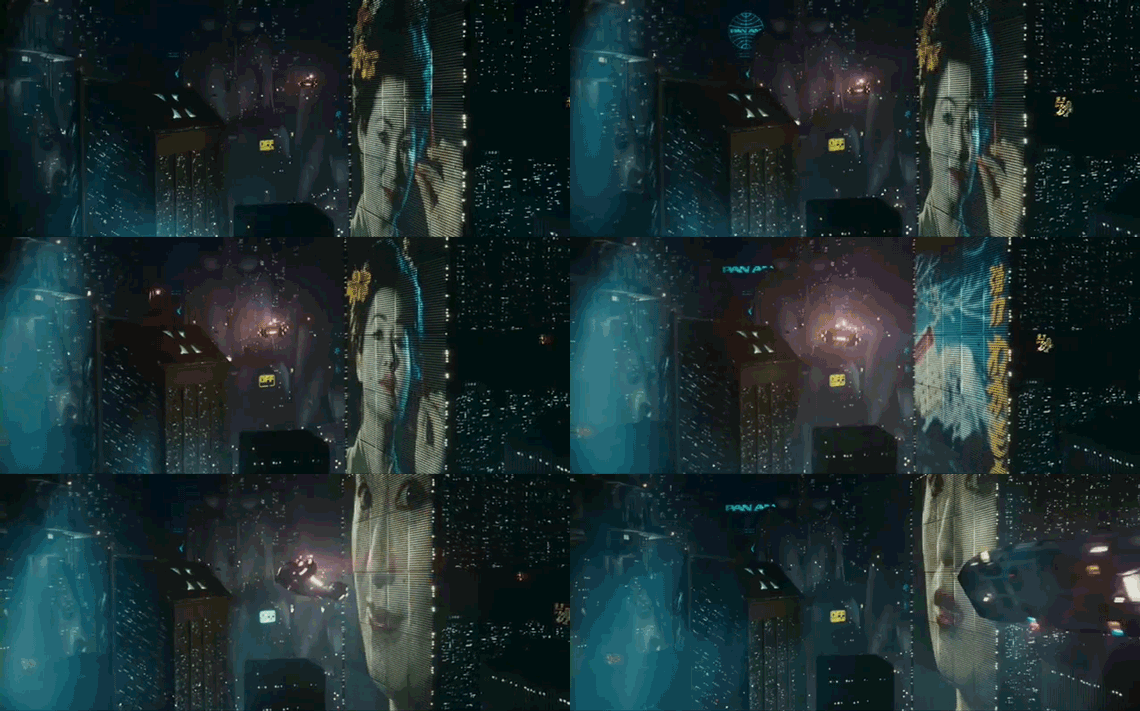
The formula proved potent. What began as an experiment quickly spiralled into a transatlantic series attracting elite riders, major sponsors, and, perhaps most crucially, cameras. By 2013, the Red Hook Crit had established a tour that included Milan, Barcelona, and eventually London, each race bringing new levels of spectacle and danger. Yet, as the races became more professionalised, their rough edges, the very elements that made them alluring, were not polished away but rather burnished into myth.
Speed, Style, and Subversion
To understand the cultural pull of the Red Hook Crit, one must understand the fixed gear bike as not merely a mechanical object but as a statement. In the early 2000s, the fixie emerged from obscurity and bike messenger culture to become a symbol of subcultural capital. Stripped-down and elegant, these machines were prized not for their practicality, but for their minimalist aesthetic and the rider’s intimate connection to the road.
The Red Hook Crit elevated this aesthetic to performance art. Riders often wore bespoke kits that balanced aerodynamic function with eye-popping design, sponsors flocked to the scene with logos that wouldn’t look out of place at a Berlin fashion show, and bicycles gleamed with custom paint jobs worthy of an art gallery. To ride in the Crit was not merely to compete, it was to perform, to brandish one’s personal style at high velocity.
There was also a particular gender politics to the scene. Although women’s races were introduced and increasingly respected as the series grew, the early years were undeniably male-dominated. The swagger, the risk, the posturing, there was more than a hint of traditional masculinity, albeit filtered through the lens of urban chic. That said, the Red Hook Crit did provide a platform for female racers to gain visibility, and over time, the women’s field not only expanded but often delivered races as fast, aggressive, and narratively compelling as the men’s.
Urban Racing as Public Drama
A criterium is, by definition, a spectacle; it’s short, frenetic, and geographically contained. But the Red Hook Crit turned that up to eleven. The races were held at night, under floodlights, in gritty urban locales. Crowds pressed in at corners, shouting encouragement and warnings in equal measure. Crashes were frequent and often dramatic, immortalised in slow-motion replays and Instagram stories.
This theatricality was no accident. The course design encouraged tight pack racing and hair-raising corners. With no brakes and narrow bars, contact was inevitable, and the slightest lapse in attention could mean a pile-up. And the sound, oh, the sound! The whirr of chains, the screams of spectators, the dull thump of carbon fibre meeting asphalt, was an urban symphony of danger and desire.
These elements created an event that was part sporting contest, part performance art, part street party. It was punk rock in Lycra, high fashion on two wheels. And it translated exquisitely into content.
Red Hook and the YouTube Effect
In a media ecosystem increasingly dictated by visuals, velocity, and virality, the Red Hook Crit was made for YouTube. Not only were the races filmed professionally, but the participants themselves, many of whom were deeply embedded in digital culture, produced their own content. GoPro footage of hairpin turns taken centimetres from disaster, rider interviews laced with pre-race jitters, slow-motion crashes that blended horror with aesthetic allure, all found their way online, amassing millions of views.
YouTube creators such as Lucas Brunelle, known for his gritty alleycat films, and later, riders-turned-vloggers like Safa Brian and Terry Barentsen, used the Red Hook Crit as narrative and visual material. Their work framed the race not just as a competition, but as a lifestyle. The fixie scene, already enamoured with self-documentation, found in YouTube a natural outlet. And while the algorithmic gods may never have ridden fixed gear bikes, they certainly smiled upon content that was fast, beautiful, and slightly mad.
More than just documenting the race, YouTube helped shape its mythology. It turned certain riders into personalities, elevated teams like Cinelli Chrome and Aventon Factory Racing into cults, and broadcast the aesthetic of the Red Hook Crit to aspiring fixie kids from Melbourne to Manila. In doing so, it democratised participation, if not in the race itself, then in the culture surrounding it.
The Rise of the Fixie Influencer
The Red Hook Crit didn’t just crown champions, it minted celebrities. While some came from traditional road racing backgrounds, others emerged from the fixed gear underground with names that echoed through group chats, Strava segments, and YouTube comment sections. In the digital age, to race was to be watched, and to be watched was to build a personal brand. Enter: the fixie influencer.
These riders rode hard, crashed harder, and captured it all in 4K. They weren’t merely athletes; they were cinematographers, social media managers, merchandise peddlers, and minor philosophers. With handlebar-mounted cameras and a well-timed “what’s up YouTube fam,” these individuals transformed their training regimens, race reports, and even injuries into digestible, binge-worthy content.
One cannot discuss this phenomenon without mentioning Safa Brian (aka Brian Vernor), whose first-person videos of hair-raising descents and gritty training rides became a genre unto themselves. His YouTube uploads blurred the line between filmic artistry and adrenaline-soaked chaos. Terry Barentsen, by contrast, offered a more introspective take, his portrait series of city riders highlighted the people behind the bikes, offering viewers the emotional texture of a scene often reduced to its aesthetics.
The influencer economy reshaped the fixed gear community. No longer was prestige solely based on results; visibility and engagement metrics became their own form of success. A rider might finish mid-pack in Milan yet gain 10,000 new subscribers and a Wahoo sponsorship for their trouble. In a sport that never promised riches, clout became the currency of choice.
This was not without tension. Purists sniffed at the spectacle, muttering about how “real racers don’t vlog.” Some feared the aestheticisation of suffering, the way wreckage was rebranded as “content.” Yet many others embraced the symbiosis, recognising that visibility helped legitimise a sport otherwise locked out of traditional cycling hierarchies. After all, if the UCI wasn’t going to broadcast fixed gear races, someone had to, and better still, if it came with a custom colour grade and a lo-fi soundtrack.
Branding, Sponsorship and the Commercialisation of Rebellion
Nothing says “subculture” quite like corporate sponsorship. This may sound ironic, and that’s because it is. The Red Hook Crit, which began as a rogue night-time dash through Brooklyn’s waterfront, quickly caught the eye of brands looking to launder themselves in the grit, sweat and daring of the fixie world. It was the age-old dance of capital and counterculture: first they ignore you, then they fund you.
At first, the influx of sponsors was modest. Local bike shops, independent framebuilders, maybe a hip café with an espresso sponsorship. But as the Red Hook Crit grew in prestige and visibility, the brands began to change. In came Rockstar Games, Cinelli, Giro, Specialized. Suddenly, riders were decked out in aero-optimised skinsuits, sipping electrolyte drinks with labels that probably cost more to design than the bikes some of them rode.
Was this selling out? That depends on your view of the relationship between subculture and capitalism. On the one hand, sponsorship allowed the event to become more professionally run. Riders got support. Races became safer (relatively speaking), better lit, and better attended. On the other hand, the spirit of defiance, the punky DIY ethos that had defined early fixed gear culture, risked being diluted.
Yet this commodification was never entirely cynical. In many ways, the brands that flocked to the Red Hook Crit were genuine enthusiasts, often staffed by people who had themselves come up through fixie culture. Cinelli Chrome, for instance, wasn’t just a marketing tool; it was a team composed of top-tier riders with authentic roots in the scene. Their kits became collector’s items. Their crashes, marketing assets.
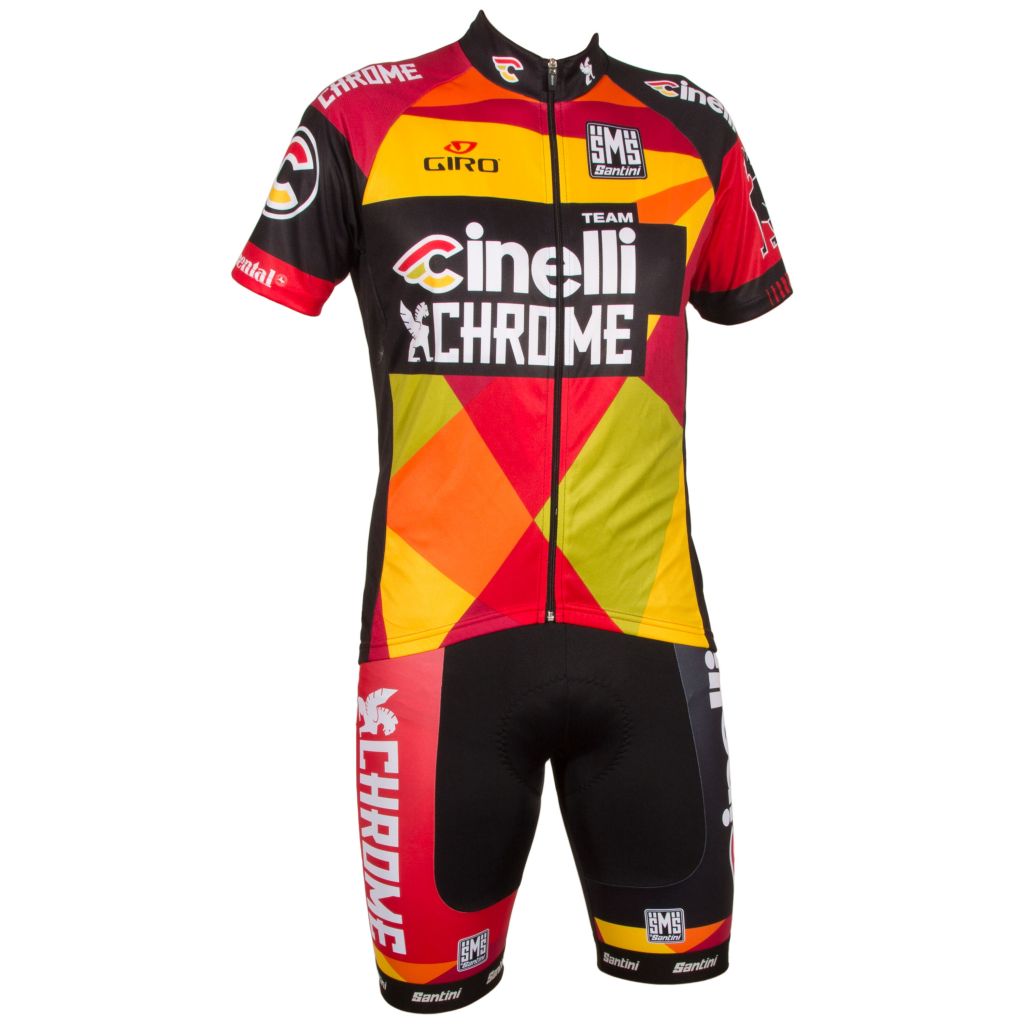
At its best, this commercialisation offered resources without erasing identity. At its worst, it blurred the line between athletic merit and aesthetic manipulation. After all, when everyone’s riding a boutique carbon frame and wearing an influencer kit, what separates rebellion from branding? For many participants, this was a tension to be managed, not resolved.
The Decline and Fall
By 2018, the Red Hook Crit was a global institution. Its races were prestigious, its riders elite, its aesthetic unmistakable. And then, like a crash on lap three, it ended. No final showdown, no farewell tour. Just a quiet announcement that the 2019 season would not be held, and a social media feed that gradually drifted into silence.
The reasons for the series’ demise were complex and somewhat opaque. Financial sustainability was a key factor. Despite the spectacle, RHC was expensive to run and logistically challenging, requiring city permits, street closures, insurance, and a small army of staff. Unlike traditional race organisers, Trimble and his team weren’t supported by national federations or television rights. Sponsors helped, but only so much.
There was also the issue of safety. The very elements that made the races exciting, tight corners, brakeless bikes, high speeds, also made them dangerous. Crashes were not just frequent, they were serious. Broken bones, concussions, hospitalisations. As the races grew in visibility, so did the scrutiny. Insurance costs rose. Liability loomed.
Moreover, the fixie boom of the 2010s had begun to taper. Urban cycling remained strong, but the cultural moment had shifted. Gravel bikes, bikepacking, and even e-bikes began to claim a greater share of attention and capital. The Red Hook Crit, once the epicentre of fixie culture, risked becoming a nostalgic throwback rather than a vanguard movement.
And then there was burnout. Running a global race series is no small feat, especially when it’s largely driven by passion rather than profit. Trimble himself hinted at the emotional and logistical toll. The Red Hook Crit had started as a party; it ended as a pressure cooker.
Yet its absence only burnished its legacy. Like a band that broke up before their fourth album, the Red Hook Crit remains suspended in a golden haze, remembered not for its fizzle but for its fire.
The Legacy
If we are to understand the Red Hook Crit’s legacy, we must see it not as a discrete event but as a vector, a force that bent the trajectory of urban cycling culture. It distilled decades of messenger folklore, track bike aestheticism, and urban athleticism into a globally recognisable phenomenon. And then, like all good subcultures, it disappeared before the mainstream could truly assimilate it.
In the streaming world, where attention is currency and everything is content, the Red Hook Crit was prescient. It understood that sport is not merely about competition but about narrative, identity, performance. It gave riders a stage and a camera and asked them to go full send.
And while the event may be gone, its influence endures. In YouTube vlogs, in fixed gear alleycat revivals, in custom-painted carbon frames with dangerously narrow bars, in every rider who still thinks brakes are optional and style is essential.
The Red Hook Crit, ultimately, was never just a race. It was an idea that cycling could be fast, fierce, beautiful, and just a little bit reckless. And like all the best ideas, it lives on in the people who believed in it, the content that remembers it, and the subcultures it continues to inspire.
 Fiefdom Tracklocross
Leave a Reply