
The radial spoking pattern, that beguiling array of straight-line spokes converging like sunbeams upon the hub, occupies a peculiar position in the lexicon of bicycle design. Lauded for its minimalist aesthetics and occasionally derided for its mechanical shortcomings, the radial spoke is at once a statement of engineering boldness and a quiet rebellion against rotational convention

Bicycle wheels, like any good bureaucratic system, rely heavily on tension. They are marvels of tensile engineering, wherein slender steel wires (or carbon if you feel like being broke and believe in Big Bike) maintain structural integrity not through compressive resistance but through the delicate balance of forces under load. Enter the radial spoke: the minimalist’s ideal, the aesthete’s delight, and the mechanical traditionalist’s recurring nightmare.
Radial spokes run directly from the hub to the rim without any perceptible tangential deviation. There is no crossing, no overlap, no charming interlacing of paths, just the bold geometry of the straight line. They resemble the spokes of a classical wagon wheel or the rays of a child’s drawing of the sun, and they look marvellous on a sunny day. But do they work? And should they?
Of Spokes and Style
To understand the radial spoke, one must first contextualise it within the history of the bicycle wheel. The wire-spoked wheel emerged in the late 19th century as a triumph of tensile logic. Unlike the wagon wheel, which relied upon rigid wooden spokes in compression, the wire wheel achieved strength through tension. Tangential lacing, wherein spokes cross over one another, creating a triangulated network, quickly became the standard due to its ability to handle both radial loads (weight) and torque (drive forces).
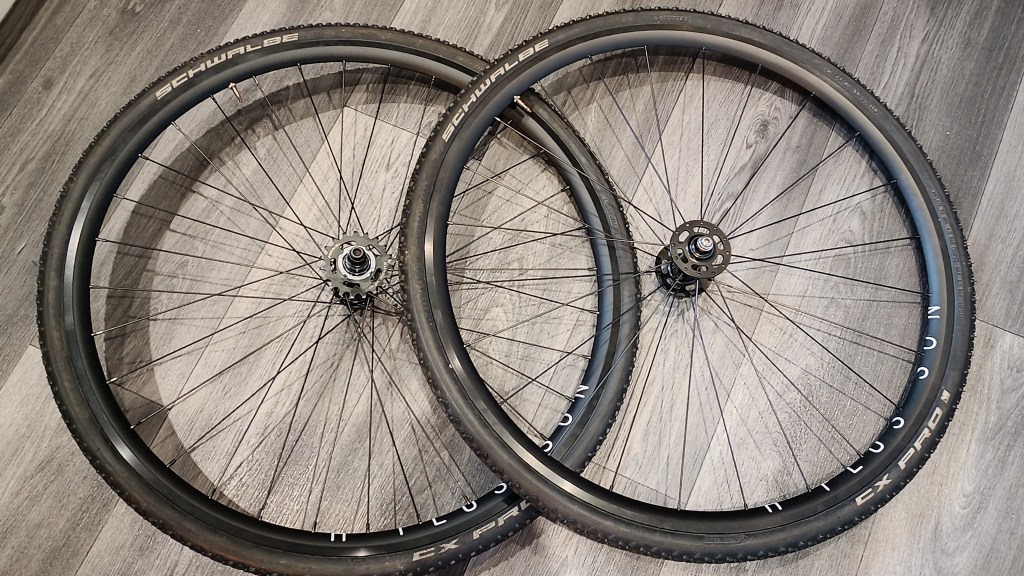
The radial pattern, by contrast, was historically relegated to front wheels of high-wheeled ordinaries, where torque transfer was minimal and style was paramount. The real resurgence of the radial spoke came much later. Coinciding with the emergence of high-performance racing bicycles (marketing term) in the late 20th century, and more recently, with the aesthetic fixations of the modern urban cycling community.
One could argue that the radial spoke is the Bauhaus of wheel design: form following function, if the function is to look fast while parked outside an artisan café.
Science Time
Let us now speak of physics, we will be gentle, so do not worry, to clarify the fundamental mechanics at play. Bicycle wheels must withstand three primary types of load:
- Radial loads — downward forces from the rider’s weight.
- Lateral loads — side forces, usually incurred during cornering or from wind.
- Torsional loads — rotational forces, particularly from pedalling or braking.
Radial spoking, as the name suggests, is adept at managing radial loads. The direct line of the spoke supports the rim against downward force with commendable efficiency. However, the absence of spoke crossings means radial wheels are notably poor at handling torsional loads. Since there is no tangential component to the spoke alignment, there is minimal capacity to transmit rotational torque from the hub to the rim (or vice versa).
This makes radial spoking entirely unsuitable for rear wheels or disc-braked fronts. Any attempt to accelerate or brake hard may result in what engineers delicately refer to as “catastrophic spoke failure” or what cyclists call “suddenly needing a dentist’s appointment.”
Radial spoking also puts increased stress on hub flanges. With all the tension pulling outward in a direct line, the flange holes can become elongation-prone or even crack over time. Some manufacturers explicitly void warranties if their hubs are radially laced, a kind of legal pre-emptive eye-roll.
And yet, despite these issues, the radial pattern persists. Why?
Aesthetics Time
If function were the sole criterion for design, the bicycle would likely still resemble a Victorian safety bicycle: all triangles and prudence. But cyclists are not immune to aesthetic considerations, and radial spokes offer a clean, modernist allure. They evoke speed, minimalism, and a kind of aerodynamic purity that, while often more psychological than physical, should not be underestimated. As I often say, cycling is a marketing game; don’t trust Big Bike.
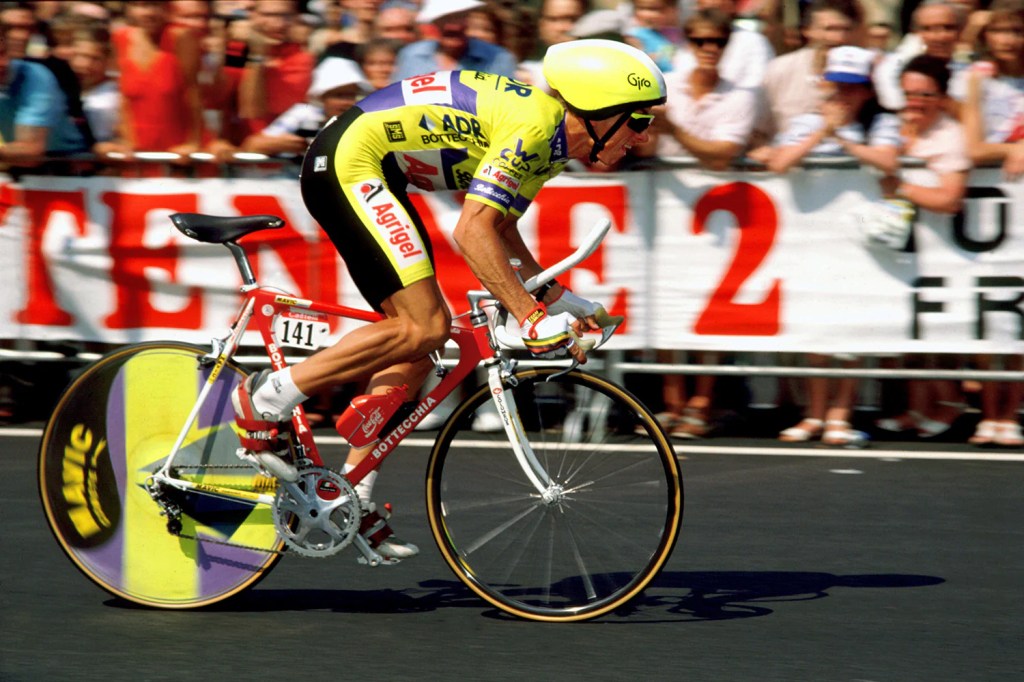
1989 24.5km 54.55km/h
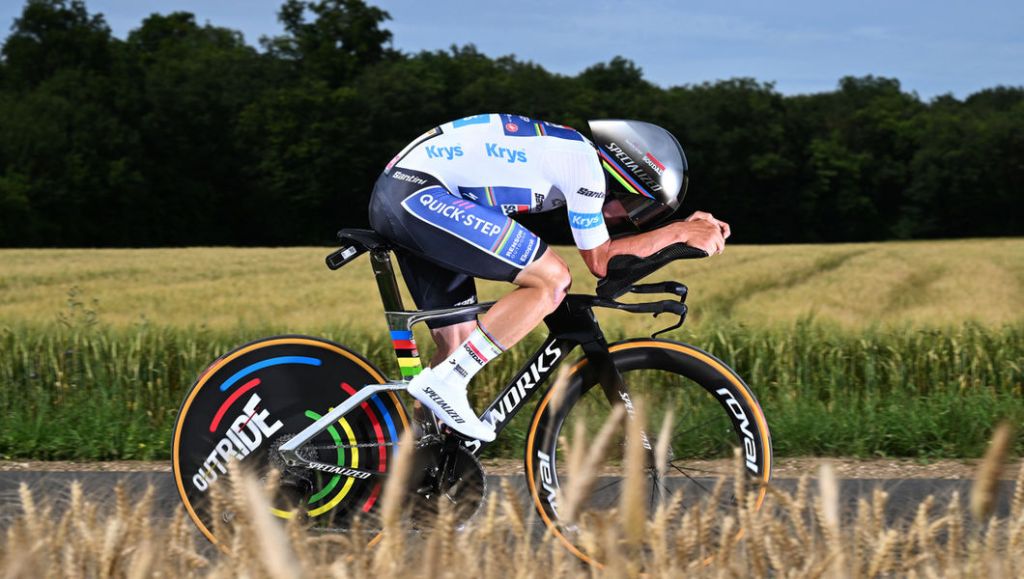
2024 25.3km 52.58km/h
Indeed, radial spoking does offer a very slight aerodynamic advantage. With no crossing points to create turbulence, the wheel presents a marginally cleaner profile to the wind. In time trialling or track sprinting, where every watt counts and every gram is under scrutiny, this can offer a negligible but real benefit. It is worth noting, however, that these advantages are often in the realm of the placebo: the rider feels faster, and thus rides faster, which is perhaps the truest form of performance enhancement available without a TUE.
The use of radial spokes in the front wheel, where torque loads are low and the wheel is more exposed to airflow, thus finds some legitimacy. The rear wheel, however, should be spared such experimentation unless one enjoys paradoxically pedalling without propulsion.
The radial spoke, like all things in cycling, is ultimately a matter of taste. It works, within limits. It shines when appropriately applied. It fails, sometimes spectacularly. But it endures, not because it is the most efficient or the strongest, but because it appeals to something deeper in the cyclist’s psyche: the desire for clarity, simplicity, and the illusion of speed.
In the end, one does not choose radial lacing because it makes sense. One chooses it because it makes a statement. And as with all statements, it should be read critically, admired cautiously, and ridden only on the front.
 Fiefdom Tracklocross
Leave a Reply