
Fixed gear bikes are popular due to their simplicity, efficiency, low maintenance requirements and aesthetic appeal. These bikes utilise a cog and lockring mechanism to secure the rear wheel to the bike’s rear hub, creating a fixed connection between the rider’s pedal strokes and the wheel’s rotation. When choosing the type of cog for a tracklocross bike, riders can select either threaded or bolt-on cogs. Although both serve the purpose of propelling the bike forward, bolt-on cogs offer distinct advantages that make them a popular choice among many cyclists. In this article, we will explore the advantages of bolt-on cogs over threaded cogs, including their impact on performance, maintenance, and overall riding experience.
Understanding Threaded and Bolt-On Cogs
Before delving into the advantages of bolt-on cogs, it’s essential to understand the differences between threaded and bolt-on cogs.
Threaded Cogs
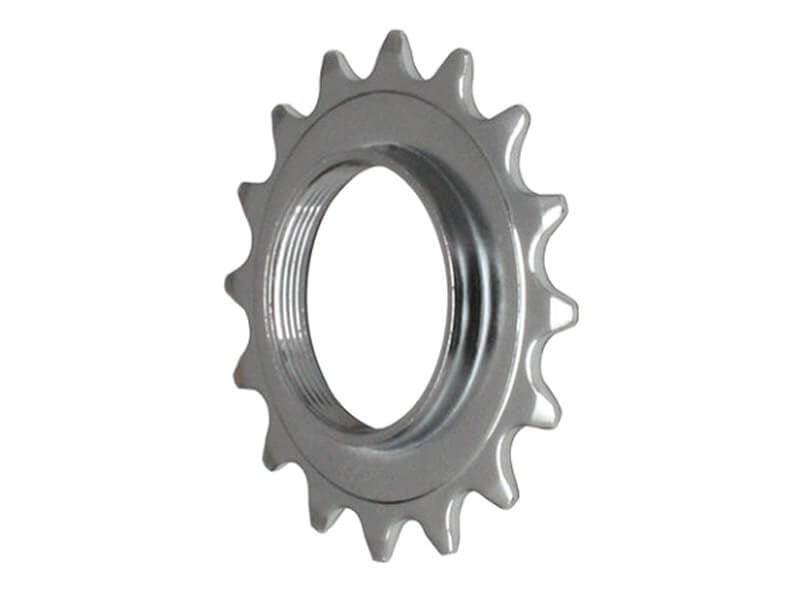
Threaded cogs feature threads machined directly into the outer perimeter of the cog. These threads engage with corresponding threads on the hub, allowing the cog to screw onto the hub body. Once threaded onto the hub, a lockring is then tightened against the cog to secure it in place. This design requires precise threading alignment to ensure proper engagement and prevent the cog from loosening during riding.
Bolt-On Cogs

Bolt-on cogs, on the other hand, utilise a different mechanism for attachment. Instead of threading onto the hub, bolt-on cogs are secured using bolts that pass through holes drilled into the cog and hub interface. These bolts are tightened to clamp the cog firmly against the hub, providing a secure and reliable connection. Bolt-on cogs typically feature multiple bolt holes, allowing for adjustment of chainline and compatibility with various hub spacings.
Now that we’ve outlined the basic differences between threaded and bolt-on cogs let’s explore the advantages of bolt-on cogs in greater detail.
Enhanced Security and Durability
One of the primary advantages of bolt-on cogs is their enhanced security and durability compared to threaded cogs. Threaded cogs rely solely on the engagement of threads to prevent loosening during riding. However, factors such as vibration, torque, and varying chain tension can contribute to loosening over time, potentially leading to unsafe riding conditions.
In contrast, bolt-on cogs offer a more robust and reliable attachment mechanism. By utilising bolts to clamp the cog against the hub, bolt-on cogs distribute the load across multiple contact points, minimising the risk of slippage or loosening. This design provides a secure and dependable connection, even under the most demanding riding conditions, such as sprinting, skidding, or riding on rough terrain.
Additionally, the use of bolts allows for higher torque specifications during installation, further enhancing the cog’s resistance to movement. As a result, riders can have peace of mind knowing that their bolt-on cog will remain securely in place throughout their ride, reducing the likelihood of mechanical issues and improving overall safety.
Simplified Installation and Adjustment
Another significant advantage of bolt-on cogs is the simplified installation and adjustment process they offer. Unlike threaded cogs, which require precise alignment and threading onto the hub, bolt-on cogs can be easily installed and removed using basic tools such as an Allen key or wrench.
The bolt-on design eliminates the need to thread the cog onto the hub, reducing the risk of cross-threading or misalignment, which can compromise the cog’s integrity. Instead, riders can simply align the bolt holes on the cog with those on the hub, insert the bolts, and tighten them to the recommended torque specification. This straightforward process saves time and minimises the likelihood of installation errors, ensuring optimal performance and safety.
Furthermore, bolt-on cogs offer greater flexibility when it comes to adjusting chainline and hub spacing. With multiple bolt holes available on the cog, riders can fine-tune the position of the cog relative to the hub to achieve their desired chainline. This adjustability is particularly beneficial for bike riders with different hub spacings or who prefer a specific chainline for optimal efficiency and drivetrain performance.
Compatibility with a Wide Range of Hubs
Bolt-on cogs are designed to be compatible with a wide range of hub configurations, making them a versatile choice for cyclists with diverse needs and preferences. Unlike threaded cogs, which require specific hub threading patterns for proper engagement, bolt-on cogs can be used with hubs that feature a variety of threading or splining standards.
This compatibility extends to both traditional threaded hubs and newer hub designs that utilise splined interfaces or proprietary configurations. Whether riders are using a classic track hub, a modern fixed gear hub, or a hub with a unique interface, bolt-on cogs offer a universal solution that ensures compatibility and ease of installation.
Additionally, the adjustability of bolt-on cogs allows riders to fine-tune the cog’s position to accommodate different hub spacings or axle configurations, further enhancing their versatility. This compatibility and adaptability make bolt-on cogs popular among cyclists who value flexibility and compatibility when selecting drivetrain components for their fixed gear bikes.
Reduced Maintenance Requirements
Maintenance is an essential aspect of bike ownership, and choosing components that minimise maintenance requirements can save time and effort in the long run. Bolt-on cogs excel in this regard, offering reduced maintenance requirements compared to threaded cogs.
One of the main maintenance challenges associated with threaded cogs is the risk of loosening over time, necessitating regular inspection and tightening to ensure proper functionality. This ongoing maintenance task can be time-consuming and inconvenient, especially for riders who prefer to spend more time riding than performing maintenance tasks.
In contrast, bolt-on cogs require minimal maintenance once correctly installed and tightened to the recommended torque specification. The secure clamping mechanism the bolts provide prevents the cog from loosening during riding, eliminating the need for frequent adjustments or tightening. This results in a more reliable and hassle-free riding experience, allowing cyclists to focus on enjoying their ride without worrying about mechanical issues.
Additionally, the simplified installation and removal process of bolt-on cogs makes it easier to perform routine maintenance tasks such as cleaning, lubrication, and inspection. Riders can quickly remove the cog for cleaning or inspection purposes and re-install it without the hassle of threading it onto the hub. This ease of maintenance contributes to the overall longevity and reliability of the drivetrain components, ensuring consistent performance over time.
Conclusion
In conclusion, bolt-on cogs offer numerous advantages over threaded cogs for fixed gear bikes, including enhanced security and durability, simplified installation and adjustment, compatibility with a wide range of hubs, reduced maintenance requirements, and customisation options. The secure clamping mechanism provided by bolt-on cogs ensures a reliable connection between the cog and hub, minimising the risk of slippage or loosening during riding. Additionally, the ease of installation, adjustment and compatibility with various hub configurations make bolt-on cogs a versatile choice for cyclists with diverse needs and preferences.


 Fiefdom Tracklocross
Leave a Reply